
While the forests are burning, are we watering our own trees?
Our first guest post began as a conference review but led to bigger questions about the industry. Emma Green, Director of Development, Invest In Open Infrastructure, elaborates below.

As with all of our articles, this post reflects the views of the author and we hope will stimulate some discussion and conversation around big questions in scholarly communications.
Reflections from APE 2026
Scholarly communication is at a turning point. The theme for Academic Publishing Europe (APE) 2026 acknowledged this, with the directive: ‘Time to build what’s next’. Yet as I sat through the sessions and discussions, I wondered if we would be better off with added punctuation: ‘Time to build. What’s next?’ This framing is less comfortable and raises the question as to whether we are building or just protecting what we already have.
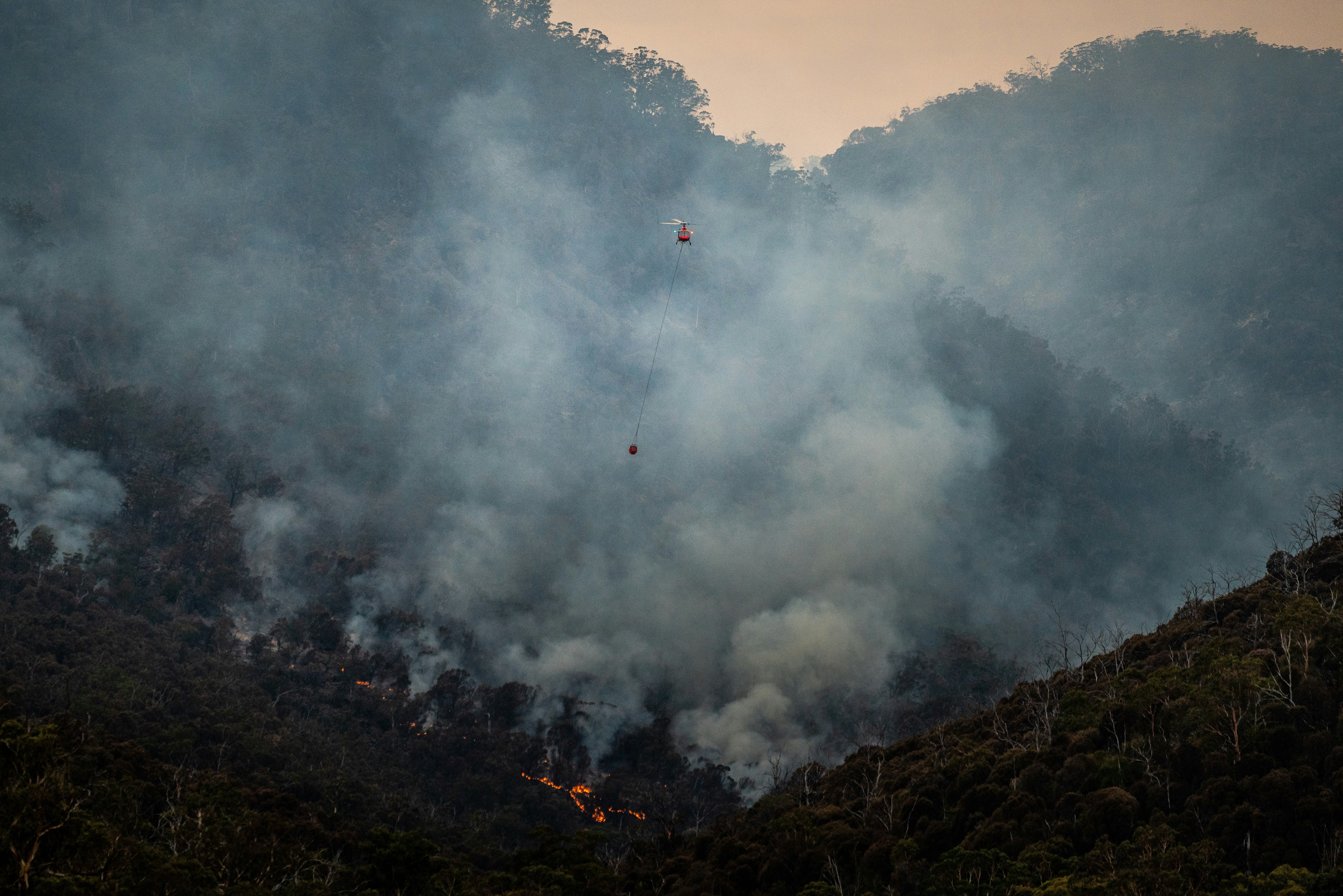
Here’s the thing: the forests are burning, and in ways that we are not fully acknowledging or addressing together. Governments are cutting research spending and reducing access to critical, globally relevant datasets. Thousands of climate and health research datasets are becoming harder to access or are disappearing entirely: from the FlyBase genetics database, to NIH repositories containing decades of research on cancer, Alzheimer’s and brain development. When the data that enables trust becomes unavailable, what are we left defending? Why are we surprised that trust in scholarly publishing continues to burn, when we’re still watering our own trees?
It’s understandable that protectionism happens in the face of a trust issue, but building back trust needs transparency, diversity and openness. At an industry-focused conference (and beyond) this means seeking out diverse voices and opposing opinions, inviting, listening, and being willing to challenge the biases and assumptions we each carry.
As Lou Peck said when I asked for her take-home from the meeting: “There’s so much more to do to collaborate, and I don't mean chit chat but actual conversations representing the diverse communities across our research ecosystem, with tangible progression moving things forward. There are certainly hidden voices not represented, and a widening gap between communities in our own industry. Freedom to speak only really comes when there is safety to give an opinion. These spaces need to exist, yesterday.”
Lou also noted something critical to the success of collaboration: freedom to speak only really comes when there is safety to give an opinion. Right now, does that exist equally across our ecosystem?
Pause a minute – think about what that reveals. Freedom to speak requires safety, but in cross-stakeholder conversations, power dynamics can make real dialogue nearly impossible. Without diverse voices, we default to familiar ones. Are we validating decisions by consulting the usual circles, mistaking consensus for universal truth?
In her book Teeming, Tamsin Woolley-Barker warns that hierarchical structures collapse under their own weight when change comes. Nature figured this out over 400 million years ago, which is why the most resilient systems are networks – with inter- and intra-species mixing – that know when to compete and when to cooperate. Right now, we are understandably managing the threats that we can see directly ahead: funding pressures, market competition, bad actors, changing workforces. But the systemic threats don’t care about our organisational or market boundaries – the loss of freedom of speech, the loss of ability to do independent science without retribution, and the loss of data that supports the trust and integrity of science.
So what happens next? What if we miss this moment? What if we stay focused on protecting our individual communities and systems?
We create space for something new. Players who listen, respond and build networks that cross traditional boundaries. Maybe that’s us, transforming. Maybe it’s newcomers bringing fresh approaches from new industries. Either way, there is an opportunity for adaptation and rebuilding trust.
Building that resilience and trust will take communities that choose to work in coopetition – competition and cooperation working hand-in-hand to drive new models forward. If we really open up how we collaborate, and with whom, think outside of our walls, discover alignments, solve problems with innovations from outside of the sector, we might actually build an ecosystem for science and its scholarly output to thrive in.
There are considerable shifts occurring. The 21st century has brought substantial technological change to publishing and so far we have embraced it, but this feels different. The forest is burning. The question isn’t whether transformation happens, it’s whether we will be part of it. Godwyns Onwuchekwa proposed something concrete: a cross-stakeholder working group, independently chaired, to coordinate action. That’s one starting point. What else is needed?
*Thanks to Lou and Godwyns for discussing their own personal take home messages from the meeting and their views on ‘what’s next?’
Emma Green is Director of Development, Invest In Open Infrastructure.
 | A guest post by
|